Tuesday, December 22, 2015

Call for supporting refugees in Macedonia

Download this call as pdf

https://clandestinenglish.files.wordpress.com/2015/11/eidomeni01.jpg?w=700&h=&crop=1

Current situation / Our experiences in Macedonia:
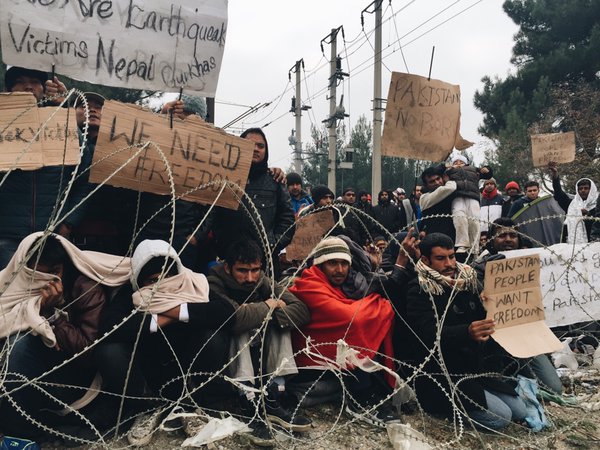
As the Greek/Macedonian border at Idomeni was closed several weeks ago for all refugees that are not from Syria, Afghanistan and Iraq, many refugees from other countries got stuck in Greece. They are now forced to cross the border illegally in the mountains and in the forests and walk through Macedonia for 5-7 days to Serbia by feet and from there continue to Europe.
When we (Open Border Crew) drove through Macedonia in December the last weeks, we met several groups of refugees (especially from Marocco, Pakistan and Iran), that were walking for days along the highway, were beaten up and robbed by the mafia and attacked by the police. If they get caught by the police they are imprisoned and pushed back to Greece. From there most of them are deported back to their home countries, where many are facing violence, poverty and punishment.
We supported them on their way by providing clothes, food, equipment like flashlights and bags, information about the route and documenting their stories. You could also drive them (but be aware of the strict laws concerning refugee support in Macedonia).
We urgently ask for international supporter groups to go to Macedonia and to support refugees crossing Macedonia in any possible way! Show your solidarity practically and let’s tear down Fortress Europe!
Concrete ways of supporting refugees crossing Macedonia
* officially (for refugees from Syria, Iraq, Afghanistan on transit)
You can volunteer at Tabanovce or Gevgelija. The camps are controlled by government and police (Gevgelia at the Greece border is ‘crisis zone’ therefore access is harder, but in Tabanovce at Serbian border you can basically just walk in by showing your passport). Help is quite organized and coordinated by NGOs (get contact from LEGIS over Refugee Volunteer Map below). Those Camps are Transit Camps which means that people are not staying there for a long time but only wait for their next train or bus to arrive. This can take many hours so food and warm clothes are provided in the camps. Both camps can only be accessed by people from Syria, Afghan and Iraq. Illegalized migrants can not get shelter there and we would not recommend them to go there. Help is needed with transporting, sorting and handing out of donations and providing food.
* support illegalized refugees – REALLY IMPORTANT!
What can you do?
– You can drive along the highways and crossing routes (e.g. train tracks, border regions in Greece and Macedonia). Illegalized refugees mostly walk at night (especially early evening after sunset) in the dark and use the highways and the railroads for orientation (e.g. they walk directly on the highway or on smaller streets close to it in the valley or on the railway tracks). People might be resting or waiting for a pick up by traffickers at gas stations or under highway bridges.
You can supply them with flashlights, jackets, scarves, gloves, hats, backpacks, boots / winter shoes, food, water, tea, maps, money, rain clothes and information.
You can build up a mobile soup and tea kitchen going up and down along the highway.
You might find robbed, injured and traumatized migrants. First aid kit is useful (even if its just used for psychological reasons).
Usually people cross from south to north, it makes sense to drive the same direction. Of course people are afraid of police and mafia, so when you approach them make sure they understand you want to help and not harm them. You should walk slowly towards them and not run. You can say “Salam Aleikum” or “Salam” and offer them water, food or other stuff to show you’re not the cops or the mafia.
You can even drive quite slowly and have a close look at the forest beneath or under the roads. When you find people walking in the bushes and it is impossible to reach them (because there might be a big height difference or a river), you can throw some food and / or clothing packages approximately to where they’re walking.
Remember not to frighten them.
Basic Arabic and Farsi skills are helpful, as well as talking French and English. You might take a dictionary for Arabic, Farsi etc. (You can find important words in different languages on the Refugee Phrase Book)
Medical skills are useful as well. If these illegalized people are injured, they can not simply go to a hospital as they will be arrested and deported by the police after their treatment. Of course there can be cases where help in a hospital is urgently needed. You should inform people about the risks they’re facing going to a hospital (prison and deportation) and they should decide themselves what to do. Try not to panic the people and stay calm in communication.
In Macedonia it is – like in many countries – illegal to transport illegalized migrants in your car. Punishment can be deportation or jail up to five years if you get caught by the police. We heard about successful lifts to the border of Serbia. It is up to yourself to get informed and judge the risks. No one is illegal!
– You can build up a network of supporters and activists in Macedonia, Greece and the whole Balkan for supporting refugees on their way to Europe by getting into contact with activists, organizing meetings, building up shelters and emergency phones…contact other activists and the info phone and get in touch with people from “Solidarnost” in Skopje, people from (No Border) Serbia, Bulgaria etc.
– Help establish safe-houses along the route (in Macedonia and the whole Balkan route) and in Skopje. People are starting to build such a support structure. Call the contact phone to get further and recent information on this. The idea is to bring injured or exhausted (illegalized) refugees to private homes or other safe places somewhere, where they can rest and continue after a while. Keep in mind that the place should stay unknown from police and no one should know about it to avoid repression for refugees and supporters by police.
– Publish the EMERGENCY PHONE FOR REFUGEES in Macedonia.
The phone number is: 0030 694 362 02 06
People/Refugees crossing Macedonia can call it if they are in need of support. The phone will be run by volunteers in Macedonia, on the Greek side of the border and by yourself. When called by refugees, support can be given by going there with the car and offering first aid, money, clothing, food and emotional support.
The idea is to already give the number to refugees in Greece who are planning to cross Macedonia (for example at the “Orfanotrofeio” squat in Thessaloniki, in Athens or already on the Greek islands) or when meeting them on the Macedonian roads.
Remember: You can save lives here. Besides state and mafia, the cold is very dangerous, too. In the north of Macedonia, temperature is 10°C less than in the south. In December, it can get up to -15°C by night. People often underestimate this risk and don’t have enough winterproof clothes.
Useful Information for Supporters in Macedonia and Greece:
Facebook group for refugee support in MK: “Help the refugees in Macedonia” (you can also spread information there): http://j.mp/help-mk-refugees
Refugee Volunteer Map with all places along the Balkan Route where support is needed and how the current situation is at different places.
https://www.google.com/maps/d/viewer?mid=zddfRUtGScOc.kQBgTQcoV5FM&hl=en...
(you can also spread information there)
Open Border Blog:
http://openborder.noblogs.org/
Blog from German activists. You can find constantly information about the situation in Macedonia, Bulgaria and the Balkanroute there.
Contact and info phone for international activists and supporters in Macedonia:
Phone number: 00389 719 69 173 (based in Skopje)
You can call the number for any questions concerning legal stuff, sleeping places, contacts,…
There is a place for sleeping in Skopje (a flat could be rented by the group “Solidarnost”) and also the left social center “AKSC” (Address: Orce Nikolov 166, Skopje) where you can go, hang out and sleep during the daytime. There you can connect with political local groups, get support and information about Macedonia and if you need sleeping places etc.
You can also ask for contact to other activists supporting refugees in Macedonia right now. If you are supporting refugees in Macedonia it would be nice if you leave a contact for other activists there.
Contact to international activists that are right now supporting refugees in Macedonia:
Phone number: 0049 157 322 67 952
Email: openborders@riseup.net
You can get information about the current situation and contact to other activists in Macedonia there. If you are supporting refugees in Macedonia it would be nice if you leave a contact for other activists there.
EMERGENCY PHONE FOR REFUGEES crossing Macedonia:
Phone number: 0030 694 36 20 206
People/Refugees crossing Macedonia can call it if they are in need of support. The phone will be run by volunteers in Macedonia, on the Greek side of the border and by yourself. When called by refugees, support can be given by going there with the car and offering first aid, money, clothing, food and emotional support.
The idea is to already give the number to refugees in Greece who are planning to cross Macedonia (for example at the “Orfanotrofeio” squat in Thessaloniki, in Athens or already on the Greek islands) or when meeting them on the Macedonian roads.
SPREAD THIS NUMBER TO REFUGEES!
Contact to the Refugee Squat “Orfanotrofeio” in Thessaloniki:
Phone number for international activists at the squat: 0030 694 299 4063
Phone number of the squat: 0030 698 9389 150
Adress is Grigoriou Lampraki 186 in Thessaloniki, Bus 14/14a at bus station “Orfanotrofeio”.
In the squat there are at the moment around 80 refugees staying together with activists from Greece and international supporters. There you can have a rest, a sleeping place, organize, give information to refugees that want to start to Macedonia and Europe,…
Lets build up a network of solidarity all over Europe!
Thank you for your solidarity with all Refugees!
Lets tear down Fortress Europe and all borders!
No border activists, December 2015

Sunday, November 29, 2015

The “refugees welcome” culture

Fist published November 16, 2015 on http://africasacountry.com/


"Refugees Welcome" at FC Dortmund Image via Twitter
In June 2012, several refugees in the city of Würzburg stitched up their mouths to protest the lack of response to their political demands. Four demands have been at the core of the reinvigorated refugee movement ever since: Germany should abolish all Lagers (asylum centres in which the large majority of asylum seekers is housed, sometimes for years and decades, and often in isolated areas of the countryside), stop all deportations, abolish mandatory residence law (Residenzpflicht, a legal requirement for many refugees to only live and move within narrow district boundaries defined by the local foreigners’ office) and guarantee refugees the rights to work and study. The refugee movements’ long-standing critique of German asylum law and the discriminatory regulations governing the lives of many asylum seekers has gained visibility in recent years – yet in the past months, it has been eclipsed in the press and in public debate by the new idea of a German Willkommenskultur (“welcoming culture”). Heeding the history and present of refugee resistance in Germany has never been more crucial.
The recent refugee movements in Germany are part of the larger struggles of immigrants and minorities against racism in post-War Germany (e.g. the Ford strike in 1973, or the movement of Antifa Gençlik, founded in 1988). The history of racist violence, which came to head in the reunified Germany of the early 1990s, provides an important reference point for current debates. Increasing arson attacks on asylum centres, and racist pogroms in the 90s were cited as important justification for claims by politicians and the media that Germany had “reached capacity”. As a result, the German government severely restricted German asylum law in 1993.
Subsequently, self-organisations such as the Refugee Initiative Brandenburg brought their critique of isolation and human rights violations in German asylum homes to international attention. Other refugee organisations such as The Voice, Karawane and Refugee Emancipation developed strategies to reach out to refugees and invite them to join a political struggle for human rights that included speaking out against the total lack of education and work opportunities and denial of health care.
The revived refugee movement in 2012 was convinced that the master’s tools – individualised recourse to the courts and bureaucratic labyrinths – would never dismantle the master’s house. Refugees from all over Germany defied mandatory residence law, mobilised across Lagers and set out on a protest march from Southern Germany to the federal capital, insisting that they must be present and visible when decisions about their lives were made. They occupied public spaces, buildings, embassies, churches, trees and roofs in Berlin, Munich, Hamburg and Hannover and took to hunger strikes.
While the refugee movement eventually gained access to the mainstream media and shifted the discourse on migration, asylum and refugees slightly, this was recently swept away in the context of Europe’s “refugee crisis”. Starting this past summer, thousands of Germans offered their support to newly arrived migrants, and Germany was lauded in the international press as the ‘welcoming champion’. Yet, while the current flurry of activity offers conveniently de-politicised gestures of charity, it mostly ignored or sidelined refugees who were already self-organized. These groups have made clear that sincere support must engage in the politics that frame causes and experiences of the flight to Europe as well as the experiences refugees make here.
A colonial mask of silence is being put back on refugees through the charity dimension of the Willkommenskultur hype: It “prevents her/him from revealing those truths, which the white master wants ‘to turn away,’ ‘keep at distance’ at the margins, invisible and ‘quiet’”.
Rather than thanking Germany for its supposed generosity, the refugee movement in Germany has not tired to point out the past and present interconnectedness of prosperity and peace in Germany with poverty and war in other parts of the world: it scandalizes neocolonial resource extraction from the Global South and weapon exports, and generally calls for resistance against nationalist, racist and capitalist border regimes. It is uncomfortable for the majority of German society to be faced with people as (political) subjects who frame their demands from a postcolonial perspective, who speak out against rampant racism across German society, and who refuse to differentiate between socio-economic and political refugees by pointing out that economic questions are also political.
But the racist violence of the 1990s euphemised as “concerns of the citizenry” had paid off – and continues to do so. A sharp rise in arson attacks on asylum centres as well as rising rightwing agitation and violence once again occasion sombre warnings by politicians and pundits/journalists about the need to ensure that the “mood” of the population is kept in check.  These public figures suggest that high numbers of refugees will “provoke” racist violence. To prevent violence, they advocate reducing the attractiveness of Germany for refugees by curtailing their rights. Political parties across the spectrum, media, and a significant percentage of citizens now demand deportations and the worsening of living conditions for all migrants – especially those not considered ‘proper’ refugees – in the name of Germany’s “welcome culture” for ‘real’ asylum seekers.
In both the smouldering remains of burned asylum homes and the political manoeuvres that follow, recent history looms large: a first batch of legislation to tighten German asylum law was passed in July, followed by another set of restrictive changes in October. A recent cabinet agreement was hailed by its advocates as the “harshest measures ever to limit the intake of refugees in Germany”. The measures particularly lash out against Roma people from the Balkans fleeing persistent racial discrimination and people escaping poverty. Several countries are newly reclassified as safe countries of origin, meaning people fleeing persecution there have very little chances of getting asylum in Germany. Lager control is tightening; incarceration and deportations increasingly facilitated.
Which path Germany will now follow might depend on which experiences become a reference point in current debates: The shadow of the 90s where violent racists succeeded in having asylum laws restricted or the history of self-organised refugee resistance.  Those who decide to “help” need to start by listening to what refugees actually want. As The Voice activist Rex Osa has reiterated in a recent interview: What refugees demand is that the notion of “help” needs to include support for self-organisations of refugees and requires a double perspective: It is important to look at both reasons for people to flee and the racism they experience in Germany. It is only then that the status quo of self-congratulatory, paternalistic help can be transcended into political solidarity.
*The Inequality Series is a partnership with the Norwegian NGO, Students and Academics’ International Assistance Fund (SAIH).
Through writing and dialogue, SAIH aims to raise awareness about the damaging use of stereotypical images in storytelling about the South. They are behind the Africa For Norway campaign and the popular videos Radi-Aid, Let’s Save Africa: Gone Wrong and Who wants to be a volunteer, seen by millions on YouTube.
For the third time, SAIH is organizing The Radiator Awards; on the 17th of November a Rusty Radiator Award is given to the worst fundraising video and a Golden Radiator Award is given to the best, most innovative fundraising video. You can vote on your favorite in each category here.

Authors


Joshua Kwesi Aikins and Daniel Bendix

Joshua Kwesi Aikins and Daniel Bendix are researchers in the Department for Development and Postcolonial Studies at University of Kassel, and are both active participants in the pro-refugee and anti-racism movements in Germany.

Thursday, October 01, 2015

Demonstration in Bremen: Refugees Welcome – against Racism and Europe’s fortress policy


On October 3rd, the German government is celebrating the fall of the Berlin wall with the motto “overcoming borders”. At the same time Europe is building multiple higher fences to block its external borders to hinder refugees who are fleeing war, persecution and life threatening circumstances. Being far away from home with hope for a better future costs ten thousands of people their lives or losing their beloved ones due to the fact that they are missing safe and legal escape routes to Europe.

FERRIES – NO FRONTEX! GLOBAL FREEDOM OF MOVEMENT FOR EVERYONE
People are fleeing for various reasons. They are fleeing war, violence, environmental destruction, discrimination and economic deprivation. Many of the escape reasons are based on the destruction of their basis of existence through the EU and its economic interests which are represented through European cooperation. Bremen and its armaments industries are also strongly profiting from this.


FIGHTING ESCAPE REASONS!
Far too little make it to the states where they hope to find a peaceful life with dignity. And far too many of those who finally make it get bitterly disappointed after their arrival. People are traumatized and attacked by racist terror groups. Refugee camps are being burnt down by Nazis. Fears of the population are often being taken out on refugees and are then expressed by racist discrimination and violence.
 

FIGHT RACISM AND NAZI TERROR!
On the outside, Angela Merkel proclaims a welcoming culture. She and the German government are planning further massive intensifications of the Asylum laws: ten thousands of people are fearing the exclusion from basic human rights including social security, welfare and medical care. The government plans to expand imprisonment, deportation and to declare more countries as safe. These differentiations between allegedly “right” and “wrong” reasons for fleeing are feeding the conflict even more which divides the refugees into imaginary groups: “Good refugees” are well-educated professionals for whom the economy can make exceptions when it comes to minimum wage. “Bad refugees” are for instance the Roma from Balkan countries who are systematically discriminated and persecuted. We are fighting against the categorizing human beings.
 

STOP RACIST ASLYUM RIGHTS, SAME RIGHTS FOR EVERYONE!
The political authorities in Bremen force refugees to live in overcrowded camps, gyms, tents, therefore creating unreasonable living circumstances. The Senat of Bremen even declared living in tents as suitable for winter – despite the fact that there is enough living space within the city. The situation of unattended and underage refugees has gotten worse during the last few months. Many of them are declared _ adults by Bremen authorities, in order to withdraw them from youth services, redistribution and increase deportation. Standards of youth _ support and the fundamental right of education are not valid for everyone in the same way.


STOP UNREASONABLE CIRCUMSTANCES, HUMANE LIVING CONDITIONS FOR EVERYONE!
The solidarity with refugees within the population is impressive and creates hope, but welcoming initiatives are not enough. We demand:

- NO MASS ACCOMODATIONS OF REFUGEES IN TENTS AND GYMS!
- AFFORDABLE LIVING THROUGH IMMEDIATE SOCIAL HOUSING!
- DAYCARE AND SCHOOLING FOR EVERYONE – MORE TEACHERS, EDUCATORS AND SOCIAL WORKERS!
- STOP ILLEGAL DETERMINATIONS OF AGE FOR UNATTENDED MINOR REFUGEES!
- PROTECTION FOR PEOPLE IN DISTRESS – STOP THE INTENSIFICATION OF ASYLUM LAWS!
- NO WALLS AROUND EUROPE!
- CREATE SAFE ESCAPE ROUTES, FIGHT ESCAPE REASONS!

Together we fight for our rights!
Let’s fight all together against racism and for creating a good life for everyone!
We stand for an open Europe and for one world where no one has to flee.


Supporters:

Acompa
Afrique-Europe-Interact Bremen
À Gauche Bremen
Arbeiterbund für den Wiederaufbau der KPD - Ortsgruppe Bremen
Archiv der sozialen Bewegungen Bremen
AStA der Hochschule für Künste Bremen
AStA der Hochschule Bremen
attac bremen
Blockupy Bremen
Bluna
Bremen Halkevi
Bremer Antikapitalistischen Linke
Bremer Bündnis Soziale Arbeit
Bremer Friedensforum
Umsonstladen bremen
DGB-Jugend
DIDF- Föderation Demokratischer Arbeitervereine Bremen
DIE LINKE Kreisverband Links der Weser
DIE LINKE Landesverband Bremen
Deutsche Kommunistische Partei Bremen-Nord
DGB-Jugend Bremen
Gesamtschüler*innenvertretung Bremen
Feliz Plenum
FemCafe
feministische antifa bremen f*ab
Flüchtlingsrat Bremen
Fraktion DIE LINKE in der Bremischen Bürgerschaft
Initaitive in Gedenken an Laye-Alama Condé
Initiative Nordbremer Bürger gegen den Krieg
Interventionistische Linke Bremen
Jusos Bremen
Karawane Bremen
Katzensprung
Komciwan e.V. (Kurdischer Kinder- und Jugendverein)
Kommunikations Zentrum Paradox
Kurdistan Solidaritätskomitee Bremen
linksjugend['solid] Basisgruppe Bremerhaven und Cuxhaven
linksjugend['solid] Bremen Landesverband
Messstelle für Arbeits-und Umweltschutz (MAUS)
noch eine autonome gruppe (neag)
SDS Uni Bremen
Sozialistische Alternative (SAV) Bremen
Stadtkommune Alla Hopp
Türkei Info Bremen
ver.di Bezirk Bremen-Nordniedersachsen
VVN-BdA Bremen
Zuckerwerk e.V.


Sunday, September 20, 2015

Refugees Bicycle tour Against Racism and discrimination in Lutherstadt Wittenberg

Refugees from the local government of Lutherstadt Wittenberg have initiated a bicycle tour against racism, isolation, “Duldung Status”, denial of working permit, denial of residence permit, and arbitration against them for so many years.
The tour starts from Lutherstadt Wittenberg to Vockerode.
Refugees have demanded to legalize all with “Duldung Status” for so many years without compromise and stop destroying their perspectives and lives!
When: 27.09. 2015
Where: Lutherstadt Wittenberg (Main train station)
Time: 12:00
All are invited to support us! Solidarity is our weapon!
Flüchtlingsbewegung Sachsen Anhalt
Refugeecomité Wittenberg (Vockerode)
Contact
015225951740 et 017699321843

Friday, September 11, 2015

Smiling again


This is the Syrian refugee and his son who were purposelly tripped by that Hungarian camerawoman as they were fleeing the border police. In better times he used to be a football coach. In any case he is a loving father.

Imagine seeing your country descend into violence, because your countrymen wanted freedom and its rulers responded with bombs. Imagine having to leave your friends, your sports team, your favorite cafe, your job, your house, your pets and most of your belongings. Imagine being a parent knowing that the place where you grew up and hoped to raise your children, is not safe enough for them to grow up in anymore. Imagine to be forced to go somewhere without knowing whether you will arrive, without knowing whether you and your family will be welcome, without knowing whether you will be able to survive.

These people aren't invaders, they haven't come to steal our jobs, they aren't risking their lives and paying thousands of euro's to cross the Mediterranean on a flimsy boat to come live here on benefits.

They are heroes for having the courage to make the choice of leaving everything behind and fighting for a better future for their families.

And to those who attack them, like that horrible Hungarian camerawoman, history will not be kind to you. #EuropeSaysWelcome #RefugeesWelcome

Monday, August 10, 2015

Declaration to the Peoples of Turkey and the World, Signed by 232 Academics in Turkey

Source: http://kurdistantribune.com/ August 9, 2015
Support Us In Our Call!
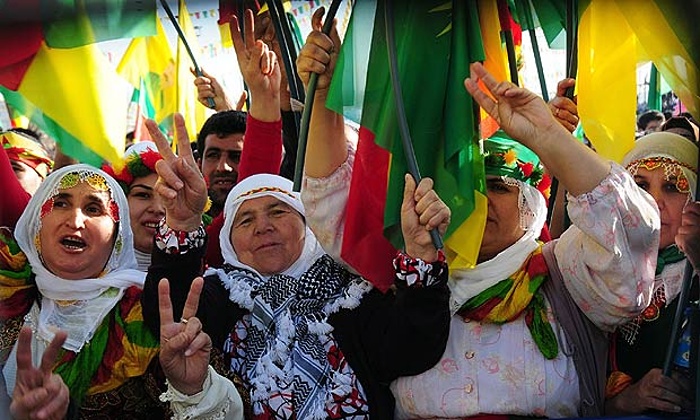
Kurds celebrate Newroz in 2013, on the eve of a PKK ceasefire
Declaration to the Peoples of Turkey and the world,
Like many people in Turkey, we, as academics, were emboldened by the peace/solution process between the Turkish state and Kurdistan Workers’ Party (PKK) officially initiated in January 2013, hoping for a new era that would end the conflicts continuing for over 30 years in Turkey. We have repeatedly stated, especially in our works on Turkey’s history, economy and social relations, that the conflict has affected every aspect of Turkey, turned people into enemies, and increased inequality, discrimination and violence. We have been of the opinion that Turkey was finally going to have a chance to face its truths, democratize and heal its wounds.

We have supported every stage of the solution process between 2013 and 2015. We have stated that the creation of a Wise People’s Committee,[1] the Dolmabahçe Agreement[2] and that enactment of a new law by the Parliament regarding the solution process[3] were positive measures. However, the comparative studies we have undertaken on the ongoing peace processes across the world have shown us that these are not sufficient measures and that the process needs to be supported with various monitoring committees and, as in the case of Mandela, the isolation of Abdullah Öcalan,[4] one of the leading actors of the process, should be lifted. We have noted that the process should not be exploited for the purposes of foreign or domestic policies. We have also stated that deep-seated hostility against the Kurds in Turkey could only end by establishing a Truth Commission and by revealing the tragedies of the past as well as those who are responsible of them.[5]
At the current state of affairs, we regret to see that that the government did not make any arrangements to guarantee the stability of the peace process, and that there are no independent civil institutions to advise and evaluate the sides so that the public can be informed and transparency can be maintained. As of today, it is unfortunate for us to witness that the process is reduced to a tool regarding inter-party competition. The policies concerning Syria, Iraq and Iran have also created an environment where the war has resumed.
It is also unfortunate that despite the warnings of academics, NGOs, responsible politicians and reporters, no steps were taken to prevent the contagious civil war in the Middle East from affecting Turkey. On the contrary Turkey is being rapidly dragged to war.
Tens of peace processes across the world have shown us that the losses are much higher when people take up arms again and that the solution comes only if new democratic spheres are opened. In the last year, we have lost our students in Kobani and Suruç. Only in this past week, we have lost many other young people to the resumed conflict between the state and PKK.
It should be known well that we will never sacrifice our children, our students and none of our youngsters for war. For us, not a single disagreement is more important than their lives and the future they will build.
We invite all parties to a consolidated ceasefire immediately. We ask the government to abandon the language that cause discrimination, hostility and conflict; the responsible reporters to disclose their colleagues that provoke the war; and the parliament to pass laws that will guarantee the continuation of the peace process immediately.
The truth does not develop under conditions of war and today Turkey needs the truth before anything else.
We are declaring to the public: There is only one lesson that the young people can derive from our writings, statements, and lectures and it is that their lives matter and the country will not survive unless they are alive. The core message of the work we do will be that war budgets are compensated by our taxes and that it is the poor who lose their lives in a war. Our philosophy as academics is that nobody has the right to oppress and insult others. Nobody can prevent others from exercising their right to free speech. Our work is concerned with teaching young people to protect themselves from the poisonous feeling of revenge, continue to seek their rights, defend truth against lies and never be discouraged from democratic discourses and actions.
We, as 232 academics who’ve undersigned this statement, invite all academics, teachers, producers and consumers of knowledge, women and men to raise their voice and be a part of democracy and truth.

Signatures:

Abdullah Sessiz, Prof, Dicle University
Ahmet Altınel, Assist Prof, Mimar Sinan University
Ahmet Hilal, Prof, Çukurova University
Ahmet Özdemir Aktan, Prof, Marmara University
Ahmet Uhri, Assist Prof, Dokuz Eylül University
Ali Akay, Prof, Mimar Sinan University
Ali İhsan Ökten, Assoc Prof, Adana
Ali Kerem Saysel, Prof, Boğaziçi University
Alper Açık, Dr, Özyeğin University
Aslı Aydemir, Instructor, İstanbul University
Aslı Davas, Assoc Prof Ege University
Aslı Odman, Instructor, Mimar Sinan University
Aslı Takanay, ABD, Boğaziçi University
Atilla Güney, Prof, Mersin University
Aydın Müftüoğlu, Assist Prof, Ege University
Ayfer Bartu Candan, Assoc Prof, Boğaziçi University
Ayla Zırh Gürsoy, Prof, Marmara University
Ayşe Berkman, Prof, Marmara University
Ayşe Durakbaşa, Prof, Marmara University
Ayşe Erzan, Prof, İstanbul Teknik University
Ayşe Gözen, Prof, Ondokuz Mayıs University
Ayşe Öncü, Emeritus, Sabancı University
Ayşegül Kanbak, Assist Prof, Batman University
Ayşen Candaş, Assoc Prof, Boğaziçi University
Ayşen Uysal, Prof, Dokuz Eylül University
Ayten Alkan, Assoc Prof, İstanbul University
Ayten Zara, Assoc Prof, İstanbul University
Bahar Oral, Res Assist, Çankaya University
Başak Can, Assist Prof, Koç University
Bediz Yılmaz, Assist Prof, Mersin University
Begüm Özden Fırat, Assist Prof, Mimar Sinan University
Berivan Gökçenay, Yıldız Teknik University
Betigül Öngen, Prof, İstanbul University
Biray Kolluoğlu, Prof, Boğaziçi University
Biriz Berksony, Dr, İstanbul University
Birol Caymaz, Assoc Prof, Galatasaray University
Buket Türkmen, Assoc Prof, Galatasaray University
Burak Üzümkesici, Res Assist, İstanbul University
Burcu Yakut-Çakar, Assoc Prof, Kocaeli University
Burhanettin Kaya, Assoc Prof, Gazi University
Bülent Bilmez, Assoc Prof, İstanbul Bilgi University
Bülent Duru, Assoc Prof, Ankara University
Bülent Küçük, Assist Prof, Boğaziçi University
Can Candan, Dr, Boğaziçi University
Cem Özatalay, Assoc Prof, Galatasaray University
Cenap Özel, Prof, Dokuz Eylül University
Ceren Özselçuk, Assist Prof, Boğaziçi University
Cesim Çelik, Assist Prof, Abant İzzet Baysal University
Ceyda Arslan, Assist Prof, Boğaziçi University
Chris Stepehnson, Instructor, İstanbul Bilgi University
Cuma Çiçer, Assist Prof, Mardin Artuklu University
Çağın Tanrıverdi, Ar. Gör, Trakya University
Çağla Aykaç, Assist Prof, Fatih University
Çiler Çilingiroğlu, Assoc Prof, Ege University
Deniz Yonucu, Dr, LSE University
Derya Özkan, Dr, Münih University
Didem Danış, Assoc Prof, Galatasaray University
Dilek Hattatoğlu, Assoc Prof, İstanbul University
Düzgün Çakırca, Assist Prof, Batman University
Elçin Aktoprak, Assist Prof, Ankara University
Ebru Aykut, Assist Prof. Dr, Mimar Sinan University
Elif Babül, Assist Prof, Mount Holyoke University
Elif Göcek, Assist Prof, İstanbul Bilgi University
Emine Meşe, Prof, Dicle University
Emrah Dönmez, Instructor, Işık University
Engin Sustam, Assist Prof, Arel University
Erdem Yörük, Assist Prof, Koç University
Ergin Bulut, Assist Prof, Koç University
Erhan Keleşoğlu, Assist Prof, İstanbul University
Ertan Yılmaz, Prof, Akdeniz University
Erol Köroğlu, Assist Prof, Boğaziçi University
Esra Mungan, Assist Prof, Boğaziçi University
Fatih Altuğ, Assist Prof, İstanbul Şehir University
Fatma Gök, Prof, Boğaziçi University
Ferhat Kentel, Prof, İstanbul Şehir University
Feride Aksu Tanık, Prof, Ege University
Ferruh Akay, Assoc Prof, İstanbul University
Feryal Saygılıgil, Assist Prof, Arel Üniveristesi
Figen Binbay, Assist Prof, Dicle University
Figen Işık, Instructor, Orta Doğu Teknik University
Fikret Uyar, Dr, Dicle University
Funda Başaran, Prof, Ankara University
Funda Şenol Cantek, Prof, Ankara University
Galip Deniz Altınay, Mersin University
Gencay Gürsoy, Prof, İstanbul University
Gökçe Topal, Assoc Prof, İstanbul University
Güçlü Ateşoğlu, Assist Prof, Mimar Sinan University
Gülhan Balsoy, Assist Prof, Okan University
Gülhan Türkay, Prof, İstanbul University
Gülce Sorguç, Res Assist, Ege University
Gürcan Altan, Prof, Trakya University
Güven Gürkan Öztan, Assist Prof, İstanbul University
H. Pınar Şenoğuz, Assist Prof, Gaziantep University
Hacer Ansal, Prof, Işık University
Hafize Öztürk Türkmen, Assist Prof, Akdeniz University
Hakan Gurvit, Prof, İstanbul University
Haldun Sural, Prof, Orta Doğu Teknik University
Hale Bolak Prof, İstanbul Bilgi University
Hejan Epözdemir, Dr, İstanbul Bilgi University
Hilal Akekmekçi, Res. Assist, İstanbul Bilgi University
Hüseyin A. Şahin, Prof, Ondokuz Mayıs University
Ilgın Erdem, Instructor, CUNY John Jay University
Işıl Ünal, Prof, Ankara University
İclal Ayşe Küçükkırca, Assist Prof, Mardin Artukulu University
İhsan Bilgin, İstanbul Bilgi University
İlkay Özkürapli, Instructor, Arel University
İnan Ünal, Instructor, Tunceli University
İrfan Açıkgöz, Prof, Dicle University
Kemal Bakır, Prof, Gaziantep University
Kemal Özay, Assist Prof, Okan University
Kıvanç Ersoy, Assoc Prof, Mimar Sinan University
Koray Çalışkan, Assoc Prof, Boğaziçi University
Kuban Altınel, Prof, Boğaziçi University
Kumru Toktamış, Assoc Prof, Pratt Institute
Kuvvet Lordoğlu, Prof, Kocaeli University
Levent Köker, Prof
Lütfiye Bozdağ, Assist Prof, İstanbul Kemerburgaz University
Mehmet Fatih Uslu, Assist Prof, İstanbul Şehir University
Mehmet Karaaslan, Prof, Işık University
Mehmet Rauf Kesici, Assist Prof, Kocaeli University
Mehmet Türkay, Prof, Marmara University
Mehmet Zencir, Prof, Pamukkale University
Melek Göregenli, Prof, Ege University
Melissa Bilal, Dr, Columbia University
Meltem Ahıska, Prof, Boğaziçi University
Meltem Gürle, Assist Prof, Boğaziçi University
Meral Camcı, Assist Prof, İstanbul Yeni Yüzyıl University
Meral Özbek, Prof, Mimar Sinan University
Mine Gencel Bek, Prof, Ankara University
Murat Birdal, Assoc Prof, İstanbul University
Murat Germen, Sabancı University
Murat Koyuncu, Assist Prof, Boğaziçi University
Murat Öztürk, Assoc Prof, Kırklareli University
Murat Paker, Assist Prof, İstanbul Bilgi University
Mustafa Altıntaş, Prof, Gazi University
Mustafa Kalay, Prof, Mersin University
Mustafa Peköz, Dr.
Mustafa Polat, Dr, Yeditepe University
Mustafa Sercan, Prof, Abant İzzet Baysal University
N. Gamze Toksoy, Assist Prof, Mimar Sinan University
Nazan Maksudyan, Assoc Prof, İstanbul Kemerburgaz University
Nazan Üstündağ, Assist Prof, Boğaziçi University
Nermin Biter, Dr, Ege University
Neslihan Önenli Mungan, Prof, Adana
Neşe Yıldıran, Dr, Işık University
Nil Mutluer, Nişantaşı University
Nora Şeni, Prof.
Nur Betül Çelik, Prof, Ankara University
Nurcan Özkaplan, Prof, Işık University
Nurettin Beltekin, Assist Prof, Mardin Artuklu University
Nuri Ersoy, Assoc Prof, Boğaziçi University
Nursel Şahin, Prof, Akdeniz University
Nükhet Sirman, Prof, Boğaziçi University
Onur Hamzaoğlu, Prof, Kocaeli University
Osman Şahin, Instructor, Koç University
Ozan Değer, Res Assist, Ankara University
Öget Öktem Tanör, Prof, retired
Özen Aşut, Assoc Prof, retired
Özgün Akduran, Assist Prof, İstanbul University
Özgür Müftüoğlu, Marmara University
Özgür Mutlu Ulus Karadağ, Assist Prof, Acıbadem University
Özgür Soysal, Assist Prof, Ege University
Özlem Özkan, Assoc Prof, Kocaeli University
Pınar Kılıçer, Res Assist, Leiden University
Pınar Saip, Prof, İstanbul University
Ramazan Aşcı, Prof, Samsun
Raşit Tükel, Prof, İstanbul University
Rehber Akdoğan, Res. Assist, Dicle University
Rıdvan Şeşen, Prof, Dicle University
Ruken Alp, Dr, Sabancı University
Sami Cankat Tanrıverdi, Res Assist, İstanbul University
Sarp Balcı, Instructor, Ankara University
Savaş Çoban, Dr.
Seçkin Özsoy, Assoc Prof, Ankara University
Seda Altuğ, Assist Prof, Boğaziçi University
Sefa Feza Arslan, Prof, Mimar Sinan University
Selçuk Ertekin Prof, Dicle University
Selim Temo, Assist Prof, Mardin Artukulu University
Sema Bayraktar, Assist Prof, İstanbul Bilgi University
Sema Erder, Prof, Marmara University, retired
Semih Bilgen, Prof, Yeditepe University
Semra Somersan, Prof.
Senem Timuroğlu, Instructor, Özyeğin University
Sevilay Çelenk, Assoc Prof, Ankara University
Şahika Yüksel, Prof, İstanbul University
Şemsa Özar, Prof, Boğaziçi University
Şule Aytaç, Dr.
Şükrü Ekin Kocabaş, Assist Prof, Koç University
T. Elvan Altan, Prof, Ortadoğu Teknik University
Taha Kahraman, Prof, Akdeniz University
Tahsin Yeşildere, Prof, İstanbul University
Tamer Demiralp, Prof, İstanbul University
Taner Gören, Prof, İstanbul University
Taner Özbenli, Prof, Ondokuz Mayıs University
Tansel Korkmaz, İstanbul Bilgi University
Teoman Pamukçu, Prof, Ortadoğu Teknik University
Tezcan Duma, Assoc Prof, Ankara University
Tuna Altınel, Assoc Prof, Claude Bernard Lyon-1 University
Tuğrul Atasoy, Prof, Bülent Ecevit University
Tülin Özdemir Johansson, Assoc Prof, Lassel Üniveristesi
Tülin Ural, Dr, Mimar Sinan University
Uğur Kara, Assist Prof, Anadolu University
Ulaş Bayraktar, Dr.
Umut Şah, Instructor, İstanbul Arel University
Ülkü Doğanay, Prof, Ankara University
Ülkü Güney, Assist Prof, Abant İzzet Baysal University
Vangelis Kechriotis, Assist Prof, Boğaziçi University
Veli Deniz, Prof. Kocaeli University
Veli Polat, Assoc Prof, İstanbul University
Vildan İyigüngör, Assoc Prof, Marmara University
Yahya Madra, Assoc Prof, Boğaziçi University
Yasemin Özgün, Assoc Prof, Anadolu University
Yasin Ceylan, Prof, Ortadoğu Teknik University
Yeşim Edis Şahin, Prof, Dokuz Eylül University
Yıldıray Ozan, Prof, Ortadoğu Teknik University
Yıldız Silier, Assist Prof, Boğaziçi University
Yılmaz Özdil, Assist Prof, Mardin Artuklu University
Yonca Hürol, Prof, Doğu Akdeniz University
Yusuf Çiftçi, Instructor, Mardin Artukulu University
Yücel Demirer, Assoc Prof, Kocaeli University
Z. Umut Türem, Assist Prof, Boğaziçi University
Zafer Ercan, Prof, Abant İzzet Baysal University
Zafer Yenal, Prof, Boğaziçi University
Zeki Kılıçarslan, Prof, İstanbul University
Zelal Ekinci, Prof, Kocaeli University
Zergün Utku Altıntaş, Dr, Gazi University
Zerrin İren Boynudelik, Dr, İstanbul Teknik University
Zeynep Gambetti, Assoc Prof, Boğaziçi University
Zeynep Kadirbeyoğlu, Assist Prof, Boğaziçi University
Zerrin Kurtoğlu Şahin, Prof, Ege University
Zeynep Kıvılcım, Assoc Prof, İstanbul University
Zeynep Uysal, Assoc Prof, Boğaziçi University

Explanatory:

[1] Wise People’s Committee (Akil İnsanlar Heyeti), which was composed of 63 members, was constituted on April 4, 2013 to explain the process to people and to report their expectations from peace.
[2] Dolmabahçe Agreement was declared on February 28th, 2015 by members of the Justice and Development Party (JDP) and People’s Democracy Party (PDP) as the framework for peace negotiations. However, after the Turkish President Recep Tayyip Erdoğan declared his disapproval of the agreement, it was disowned by JDP.
[3] On July 15th, 2015, the Law on ending terror and strengthening of social cohesion was passed that gave legal framework to peace negotiations.
[4] Abdullah Öcalan is the leader of PKK and remains in prison since 1999.
[5] Throughout the 1990s when the war between the Turkish state and the PKK was at its peak a number of human rights violations has been committed by the state against Kurds including disappearance, extra judicial murders, displacement, rape and harassment. To this day no one has been prosecuted for these crimes although confessions of former officials who committed these crimes are abound. During 2000s, Kurds living or working in cities of Turkey have been victims of numerous hate crimes.

Contact:

For information contact: barisakademisyen@gmail.com